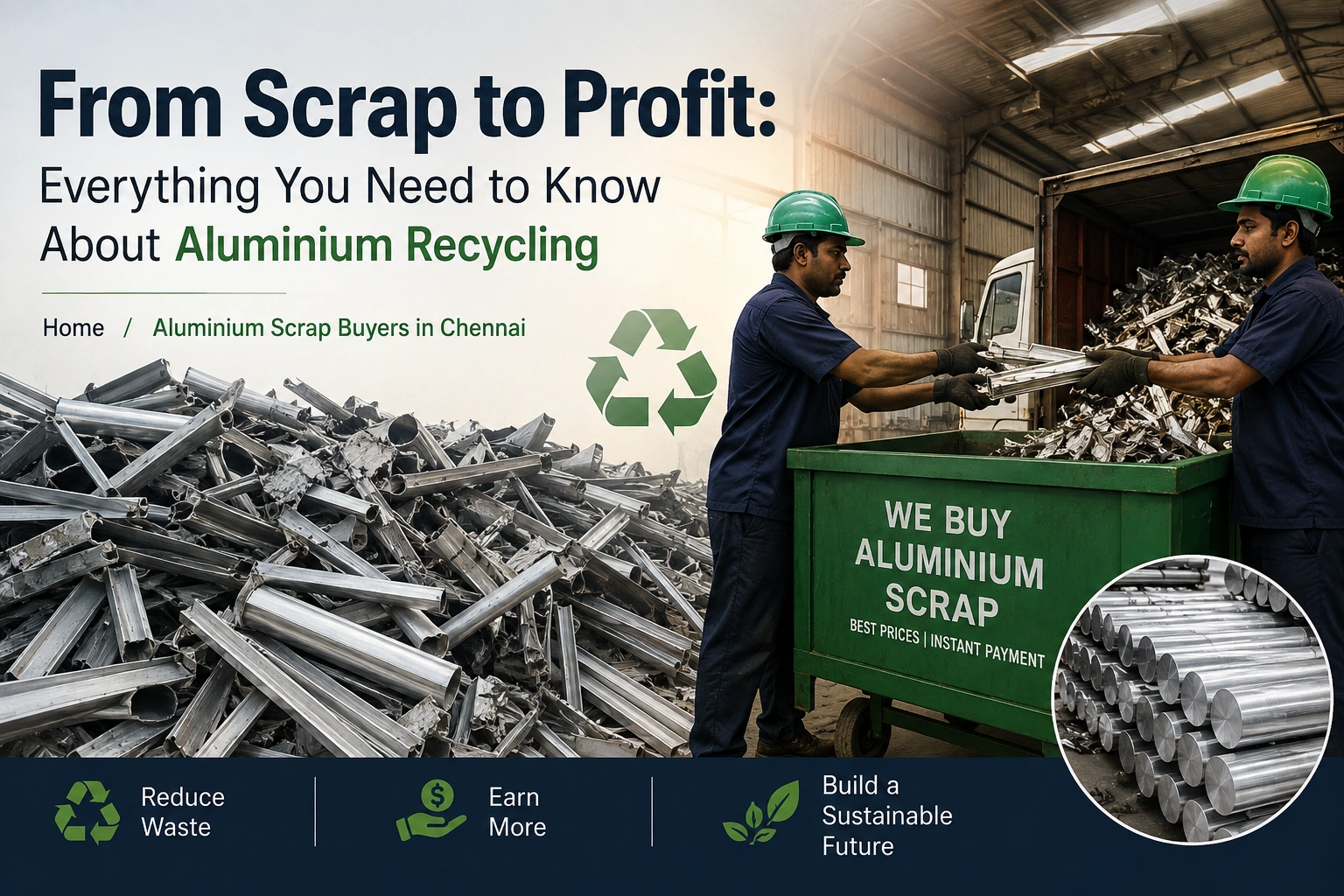
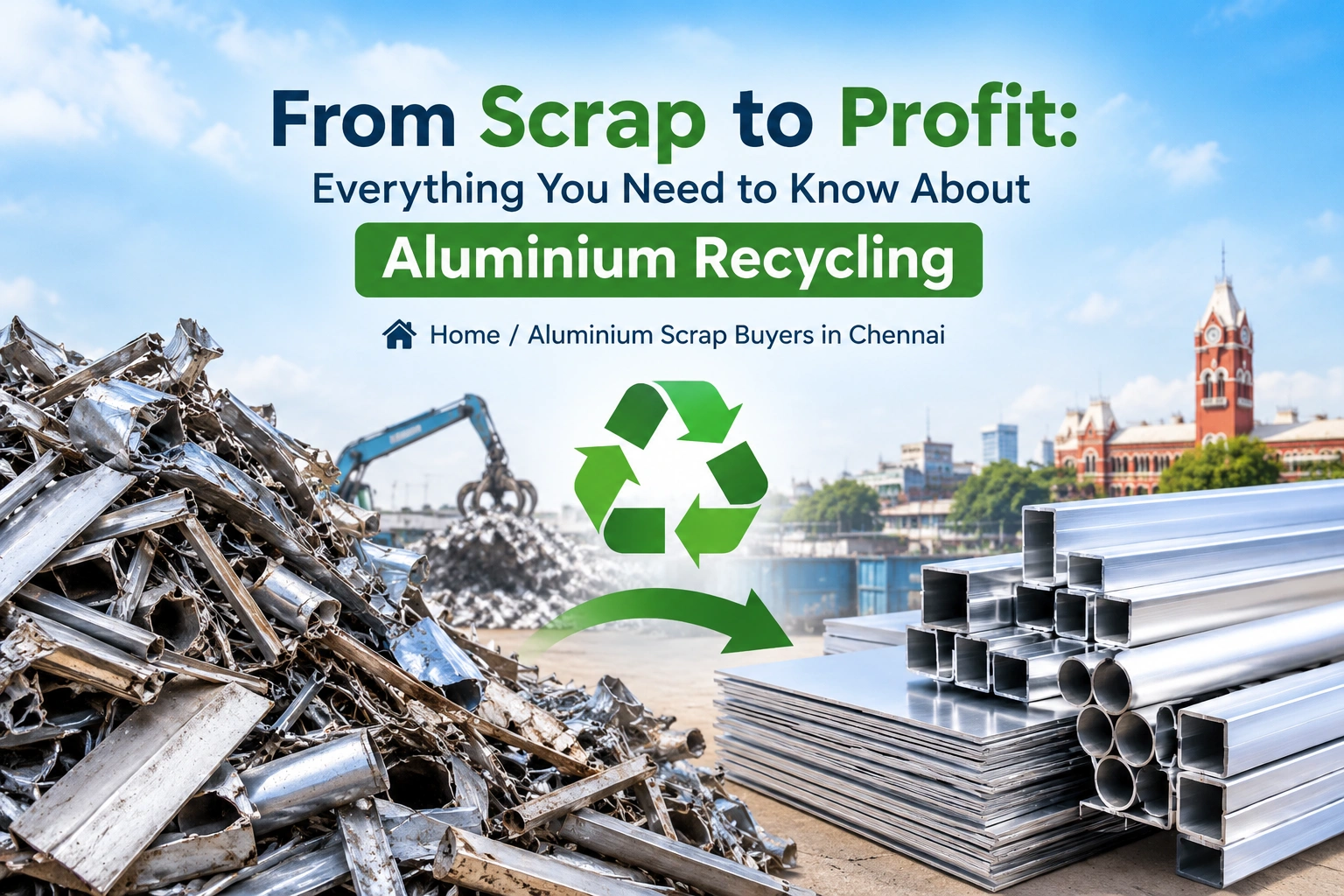
“Scrap is not the end of aluminium’s journey; it is the beginning of another.”
Most people look at discarded aluminium and see waste, but in reality, it is a resource waiting for a second life. From household items and construction materials to industrial leftovers, aluminium retains its value long after its first use. With the right recycling process, what seems like scrap today can become a valuable raw material for tomorrow's products while reducing environmental impact and conserving natural resources.
This is where Aluminium Scrap Buyers in Chennai play an important role. Professional buyers ensure that aluminium scrap is collected, sorted, and recycled responsibly while helping sellers receive fair value for their materials. Whether you are an individual, contractor, manufacturer, or business owner, understanding how aluminium recycling works can help you make informed decisions and turn unused metal into meaningful returns.
A stack of discarded aluminium appears at first sight to be just garbage. However, there is an important benefit to aluminium that it can be recycled and reused while still maintaining its properties. This means that even used aluminum can be put to use by the recycling industries and manufacturers.
Aluminium scrap can be derived from virtually anywhere! Production offcuts may be produced in a factory, or old frames and profiles may be left behind in a renovation project. When products are no longer needed, they can enter the aluminium recycling stream, even in the home.
When can aluminium be put to good use, rather than wasted? Aluminium is recycled, which is a second use for the discarded metal. This decreases the amount of waste and promotes better utilization of resources that have already been taken from the ground and produced.
Collectors aren't the only people involved in recycling aluminium. After the collection, the waste must be well sorted, sorted, and cleaned before it can be used for further processing. Proper handling is necessary to ensure that there is no waste of recyclable aluminium among other unwanted materials.
There are many types of aluminium scrap that do not command the same price. The type, purity, cleanliness, quantity, and current market conditions can affect the assessment of the material. Sellers can have a better understanding of how their scrap might be judged with knowledge of these factors.
Aluminium scrap condition can be a significant factor when evaluating. If aluminium is mixed with plastic, rubber, dirt, or even other metals, further separation is necessary. It helps to collect, assess, and recycle it properly due to the proper sorting of materials.
What looks like waste today can become valuable material tomorrow.
The recycling of aluminium generates benefits other than financial returns from scrap. Recycling and re-using aluminium helps to minimise waste production and optimise the use of resources. It also promotes an approach to materials usage that keeps materials useful for longer – circular.
The buyer you select can impact the ease and transparency of the selling process. A professional scrap buyer should have a clear evaluation process, and it should be communicated properly with regard to the material being bought. In the case of businesses that produce scrap on a regular basis, the right scraps buyer can also simplify the collection process.
There is no need to leave unused aluminium in a storage area, workshop or ware house. Unwanted aluminium can be put to a good use and turned into income if collected and sold via an appropriate channel. This is particularly helpful for the businesses that produce scrap frequently.
The trend of sustainability and efficient resource use in industries will continue to be associated with aluminium recycling. The importance of aluminium recycling in the context of sustainability and efficient resource use in industries will remain. Improved collection methods, segregation and responsible recycling can help to keep valuable aluminium in the material cycle.
Aluminium may leave your hands as scrap, but its journey does not have to end there. With the proper sorting, responsible recycling, and the right buyer, unwanted aluminium can move back into the production cycle while helping you recover its value. Whether it comes from industries, construction work, businesses, or everyday use, treating scrap as a resource rather than waste can make a real difference. By choosing reliable Aluminium Scrap Buyers in Chennai, you can turn accumulated metal into meaningful returns while supporting a smarter and more sustainable approach to aluminium recycling.
Aluminium sheets, profiles, frames, utensils, industrial offcuts, old components, and other recyclable aluminium materials can generally be sold, depending on the buyer's acceptance criteria.
The value can depend on factors such as the type, purity, condition, quantity, cleanliness, and prevailing market demand for aluminium.
Yes. Separating aluminium from plastic, rubber, iron, and other unwanted materials can make identification and evaluation easier and may help improve the overall value of the scrap.
Yes. Manufacturing units, construction companies, workshops, and other businesses that generate aluminium waste regularly can establish a convenient scrap-selling routine.
Professional Aluminium Scrap Buyers in Chennai can provide a more organized approach to scrap collection, evaluation, and purchasing, helping sellers manage unwanted aluminium more efficiently.
© 2026 MMM Traders.
| All rights reserved | Design and Developed By